Wednesday, 2 July 2025

Easy CBD-Infused Ice Cream


๐Ÿจ Easy CBD-Infused Ice Cream 

Here’s a super easy CBD-infused ice cream recipe — no ice cream maker needed!

๐Ÿ•’ Time: 10 min prep, 4+ hours freeze

๐Ÿฆ Serves: 4

๐ŸŒฟ CBD: Adjust to your desired dosage


๐Ÿงพ Ingredients:

  • 2 cups heavy whipping cream

  • 1 can (14 oz) sweetened condensed milk

  • 1 tsp vanilla extract

  • Your desired amount of CBD oil or tincture (unflavored or complementary flavor)

  • Optional: chocolate chips, berries, crushed cookies, etc.


๐Ÿ‘ฉ‍๐Ÿณ Instructions:

  1. Whip the cream
    In a large bowl, whip the heavy cream using a hand mixer or stand mixer until stiff peaks form (about 3–4 minutes).

  2. Mix CBD & flavor base
    In another bowl, mix the sweetened condensed milk, vanilla extract, and your CBD oil/tincture. Stir well to evenly distribute the CBD.

  3. Combine
    Gently fold the whipped cream into the CBD mixture. Do this slowly to keep the mix airy.

  4. Add mix-ins (optional)
    Fold in any extras you like — chocolate chips, fruit, nuts, etc.

  5. Freeze
    Pour the mixture into a loaf pan or airtight container. Cover with plastic wrap or lid.

  6. Freeze for at least 4 hours, or overnight, until firm.


๐Ÿ’ก Tips:

  • CBD Dosage: If you're serving 4 people and want ~20mg per serving, add 80mg of CBD total.

  • Flavor twist: Try mint extract + chocolate chips, or espresso powder for a coffee version.

  • Storage: Lasts 1–2 weeks in the freezer.


Making CBD ice cream at home has never been easier or more fun! With a few simple ingredients and without an ice cream maker, you can enjoy a refreshing dessert that combines taste and well-being. Experiment with flavors and CBD doses that suit your needs, and enjoy your ice cream responsibly. Happy enjoying from the Mycannashop!!!

Friday, 6 June 2025


 40 Years of Sensi Seeds๐ŸŒฟ๐ŸŒฟ๐ŸŒฟ

With nearly 40 years of experience as the #1 seed bank, Sensi Seeds weed seeds cater to every budget and need. Ready to get started? 
Check out Sensi Seeds cannabis strain catalogue on ๐Ÿ‘‡๐Ÿ‘‡๐Ÿ‘‡

Friday, 25 August 2023

"CBD & Seizures in Lennox–Gastaut syndrome"


Researchers provide further evidence that the cannabis compound, CBD, is effective at reducing seizures in people with epilepsy.

The new study reveals CBD significantly reduced seizures in people with Lennox-Gastaut syndrome. Previously, the researchers demonstrated CBD was effective at seizure control in Dravet syndrome.


Cannabidiol (CBD), a compound derived from the cannabis plant that does not produce a “high” and has been an increasing focus of medical research, was shown in a new large-scale, randomized, controlled trial to significantly reduce the number of dangerous seizures in patients with a severe form of epilepsy called Lennox–Gastaut syndrome.

In the new study comparing 2 doses of CBD to a placebo, the researchers reported a -41.9% reduction in “drop seizures” (a type of seizure that results in severe loss of muscle control and balance) in patients taking a 20 mg/kg/d CBD,
-a 37.2 percent reduction in those on a 10 mg/kg/d CBD and
-17.2 percent reduction in a group given a placebo.

“This new study adds rigorous evidence of cannabidiol’s effectiveness in reducing seizure burden in a severe form of epilepsy and, importantly, is the first study of its kind to offer more information on proper dosing,”
says Dr. Devinsky.

Privacy Policy

This Privacy Policy describes Our policies and procedures on the collection, use and disclosure of Your information when You use the Service and tells You about Your privacy rights and how the law protects You.

We use Your Personal data to provide and improve the Service. By using the Service, You agree to the collection and use of information in accordance with this Privacy Policy. This Privacy Policy has been created with the help of the Free Privacy Policy Generator.

Interpretation and Definitions

Interpretation

The words of which the initial letter is capitalized have meanings defined under the following conditions. The following definitions shall have the same meaning regardless of whether they appear in singular or in plural.

Definitions

Wednesday, 24 May 2023

"How to Make Cannabidiol Infused Ice Cream at Home"

Can’t wait for Half Baked Ben and Jerry’s infused Ice Cream? It’s time to whip up a batch of basic vanilla CBD ice cream at home.

A vanilla base is all you need to create a world of flavors, from berry blends to chocolate ripples, to your own Half-Baked creations.


Ingredients: 

  • 2 cups heavy cream
  • 1 cup whole milk
  • ⅔ cup honey
  • ⅛ tsp fine sea salt
  • 6 large egg yolks
  •  2 tsp vanilla extract
  • 1/2 gram of your favorite CBD powder

Directions:

Monday, 10 April 2023

"Cannabinoids & Glioblastoma Therapy"

Glioblastoma (GBM) is the most malignant brain tumor and one of the deadliest types of solid cancer overall. More than 95% of GBM patients die within 5 years after diagnosis. Accumulating evidence indicates that cannabinoids have potent anti-tumor functions.


Glioblastoma...

Half of newly-diagnosed gliomas are glioblastomas (GBMs), with an incidence in adults of 0.59 3.69 cases per 100,000 person life-years. Primary GBM occur more commonly in male patients whereas the reverse is the case for secondary GBM. The mean age of primary and secondary G BM patients is 62 and 45 years, respectively (Adamson et al., 2009).

Cannabinoids...

The term cannabinoids originally described bioactive constituents of the plant Cannabis sativa. The cannabis ingredients were used traditionally for their medicinal purpose but also for their recreational properties. Most of the cannabinoids bind to G-protein coupled cannabinoid receptors, CB1 and CB2, and act as agonists or inverse agonists.

Saturday, 8 April 2023

"Industrial Hemp,Agronomy and Ultilization"

There are increased interests in growing grain and fiber hemp (Cannabis sativa L.) as well as in large-scale hemp products. Cannabis has been grown/ utilized for thousands of years as a fiber, grain, and medicinal plant. 

However, the strict control of cannabis cultivation to combat illegal use, the spread of new yarns and oilseeds, and the advent of cheap synthetic fibers caused a decreased/eliminated hemp production

Hemp has a long history of being used for fiber, grain, and medicinal purposes, but its cultivation has been strictly controlled due to concerns about illegal drug use, competition from synthetic fibers, and bans in many countries.

However, with the legalization of hemp in the USA through the 2014 and 2018 Farm Bill, research programs have been launched by universities to explore its potential. Hemp has the advantage of being a versatile crop that can be used for multiple purposes, creating opportunities for the market to value hemp products.

This paper, published on MDPI Open Access Jurnals, highlights that hemp has the potential to be a sustainable and environmentally friendly crop, with its ability to absorb heavy metals, sequester carbon, and suppress weeds without the use of pesticides. The paper aims to examine the historical and recent literature on hemp agronomy and utilization, focusing on industrial hemp for grain and fiber production.

Thursday, 6 April 2023

"The Effectivenes of Medicinal Cannabis in Adults with Non-Cancer Diagnoses"

This research conducted through a retrospective medical record review aimed to describe the characteristics and effectiveness of medicinal cannabis use in adults with non-cancer diagnoses in Australia. 
People with chronic conditions may benefit from using medicinal cannabis for treating chronic pain, multiple sclerosis, Parkinson’s and other conditions. 


The study reviewed 157 medical records, with the majority of patients were predominantly female (63.7%), aged 63.0 years, and from the Greater Sydney region (86.6%). Most patients were born in Australia (66.9%) , with 17.8% stating previous cannabis use and having neurological (58.0%) or musculoskeletal (24.8%) conditions.


The findings showed that 53.5% of patients perceived medicinal cannabis to be beneficial. Significant changes over time were observed in various symptom assessments, including pain, bowel problems, fatigue, difficulty sleeping, mood, quality of life (QoL), breathing problems, and appetite.

Monday, 6 March 2023

CBD & Yoga "A Perfect Combination"

Yoga’s mind-body-spirit connection makes it popular for men and women of all ages. It teaches us to become more present with our bodies and breathing while enhancing our physical health.
But have you ever been in the middle of a yoga class and wondered why you can’t silence your thoughts???
CBD and practicing yoga together is not a new idea. In fact, the ancient Indian sacred texts of the Vedas count cannabis as one of the 5 sacred plants.
It seems like a natural fit – because the benefits of practicing Yoga and taking CBD separately are very similar – reduced stress, lower inflammation, and increased feelings of wellbeing and when taken together, they uniquely complement each other.

Yoga has been seeing an increase in popularity for many decades now, and cannabidiol is swiftly catching up. With virtually no side effects and excellent synergy, combining the two could be what you need to take your daily exercise routine to the next level of wellness.

Monday, 9 January 2023

Arizona Supreme Court: "Maternal Use of Cannabis for Morning Sickness Doesn’t Constitute Child Neglect"

The Arizona Supreme Court has declined to hear any further challenges to an appellate court ruling which determined that child welfare officials acted inappropriately when they placed a woman on a state registry for having consumed medical cannabis while pregnant. 


The Court’s order, issued Thursday, removes the mother’s name from appearing on the state’s registry, which is accessible to employers performing background checks.

The Arizona Department of Child Safety initially took action against the mother, Lindsey Ridgell, in 2019 when her newborn tested positive for cannabis. Last April, justices on the Arizona Court of Appeals unanimously ruled that the prenatal exposure in this case did not constitute “neglect” because the mother was medically authorized under the law to consume cannabis products to treat symptoms of morning sickness. 

Friday, 5 August 2022

"The use of Medical Cannabis for Treating Cancer Related Symptoms in Oncology Patients"

Many comorbidities are associated with oncology diseases. In cancer, the associated symptoms include pain, anxiety, depression, insomnia, decreased in quality of life, increased disability and negative effects on sexuality.


These symptoms are some of the most fundamental causes of suffering and disability for oncology patients while undergoing therapies, and some may even lead to worse prognosis.

Traditionally, cancer-related pain is mainly treated by opioid analgesics but a promising substitute for opioid-based medication is Medical Cannabis (MC) and
Cannabinoid treatment for cancer-related pain is generally recognized as safe!

Despite the fact that there is a knowledge gap in the study of Cannabis, especially for treating cancer-related pain, a 2020 study showed that most cancer patients requested MC treatment from their oncologist.

The Adverse Effects (AEs) from cannabinoids for cancer treatment are generally well tolerated by the patients and categorized as mild to moderate and the most frequent AEs are memory impairment, drowsiness, nausea, vomiting and xerostomia (dry mouth).

The Study...

This long-term study was conducted between January 2019 and September 2021 in Israel and pulished in
Frontiers in Pain Research on 20 May 2022.
The institutional Ethics Committee of Haemek Medical Center and Galil Medical Center also approved the study.

Researchers conducted a multi-center, prospective, 6-month longitudinal study that followed up on the effectiveness and safety parameters of MC treatment for cancer-associated symptoms.

Saturday, 21 May 2022

"Grant funds to researchers who are studying cannabis treatment for cancer"

The purpose of this Notice of Special Interest (NOSI) is to promote research in understanding the mechanisms by which cannabis and cannabinoids affect cancer biology, cancer interception, cancer treatment and resistance, and management of cancer symptoms.


The "National Institutes of Health" (NIH) is prepping to grant funds to researchers who are studying cannabis treatment for cancer and will soon be available to researchers who are working to treat cannabis. 


Within the US, many states have permitted the use of cannabis products, but state policies vary widely regarding the types of products allowed and for what purpose they may be used. Concurrently, the delivery methods of cannabis have diversified and now include edibles, oils, tinctures, topicals and inhaled forms. 

Cancer patients use cannabis and cannabinoids to manage symptoms of cancer and cancer treatment including anorexia, nausea, and pain. Recent survey evidence suggests that a quarter of cancer patients have used cannabis for symptom management. Despite the increase in cannabis and cannabinoid use, research about their health effects, including potential harms and benefits, remain limited.

Wednesday, 23 March 2022

"HEMP STEEL REBARS... Stronger Than Steel?"

Researchers from Rensselaer Polytechnic Institute,confirm that hemp rebar could be a suitable alternative to steel in cement construction.
Dan Walczyk, director of the manufacturing innovation center and Alex Tsamis, associate director of the Architecture Science & Ecology Center, say they have produced an alternative to steel in concrete buildings and various infrastructure projects.


Both scientists agree that hemp-based natural fiber-reinforced thermoplastic rebar has the potential to displace steel as the most preferred reinforcing technology in a few years. These hemp rebars are partially guaranteed to eliminate corrosion challenges, and they are more durable than steel bars.

Rebar is a crucial component in the frameworks of cement buildings. They help construct perfectly standing and durable skeletal frameworks for convention infrastructure projects. On its own, concrete lacks tensile strength, and this is the primary reason why rebars are used—to provide tensile strength.

The Manufacturing Potential of Hemp

About 150 years ago, before the onset of cannabis prohibition and the criminalization of offenders, hemp was used to produce over 75% of the goods consumed by Americans. The manufacturing of hemp-derived goods was scrapped when the government banned the cultivation and usage of the drug based on the threat of abuse. Currently, hemp is at the forefront of manufacturing discussions due to its undeniable potential to serve humans and the global ecosystem.

Saturday, 19 March 2022

"Cannabidiol as effective as antipsychotic meds with fewer side effects".

Schizophrenia is a mental disorder that affects a person’s ability to think, feel, and behave clearly. 

It can cause psychotic episodes, and treatment is usually lifelong and involves antipsychotic medications with toxic side effects.


In 2012, researchers published a study in Translational Psychiatry showing that a CBD isolate can treat schizophrenia as effectively as antipsychotic pharmaceuticals — and with far fewer side effects.

In this study, researchers led by Markus Leweke, MD, of the University of Cologne in Germany recruited 39 people with schizophrenia who were hospitalized for a psychotic episode.

Tuesday, 1 February 2022

"GPR55 The third Cannabinoid Receptor (CB3)"

Finding the CB3 receptor could mean huge medical advancements for cannabis medicine.
Originally called GPR55 after the gene that encodes it, the CB3 receptor is an exciting discovery for science. It is now clear this receptor is part of the Endocannabinoid System and interacts with endocannabinoids and phtyocannabinoids like THC and CBD.


Every animal, have an Endocannabinoid System. Cannabinoid receptors are found throughout the body. But where has CB3 been hiding? Well, turns out it hasn’t exactly been hiding. It’s more like researchers didn’t connect it to endocannbinoid activity before now.

Firstly, the two most researched receptors are CB1 and CB2. While CB1 receptors are prominent in the central nervous system, and CB2 receptors typically reside in the immune system. CB3 receptors were incognito, previously identified as GPR55. At first, science didn’t know that this receptor even accepted cannabinoids.

The CB3 receptor stayed hidden from scientists because it’s so unlike the other cannabinoid receptors. It only shares 13% of amino acid identity with them. It simply doesn’t look like it would react with cannabis, so scientists on the hunt for new cannabinoid receptors passed over it for years. This designation means that while the receptor had been found, science doesn’t yet know what activated that receptor.

When CB3 was first discovered in 1999, many doubted it was a cannabis receptor. It wasn’t until real proof came along years later that medical researchers accepted that GPR55 was indeed the 3rd Cannabinoid Receptor.

Saturday, 29 January 2022

"SAFE & LEGAL ACCESS TO MEDICAL CANNABIS AND CANNABIDIOL (CBD)"


While not everyone with epilepsy should or would consider medical cannabis or cannabidiol (CBD) as a treatment option, some people living with uncontrolled seizures have reported beneficial effects and reduced seizure activity when using medical cannabis, especially strains rich in CBD. Further research is needed on the effects of medical cannabis on epilepsy, but when recommended by a treating physician, medical cannabis may be the best alternative for some individuals living with drug-resistant epilepsy and uncontrolled seizures.


Access to medical cannabis will support increased research efforts and allow individuals who have failed to gain seizure control an option for treatment.

Thursday, 27 January 2022

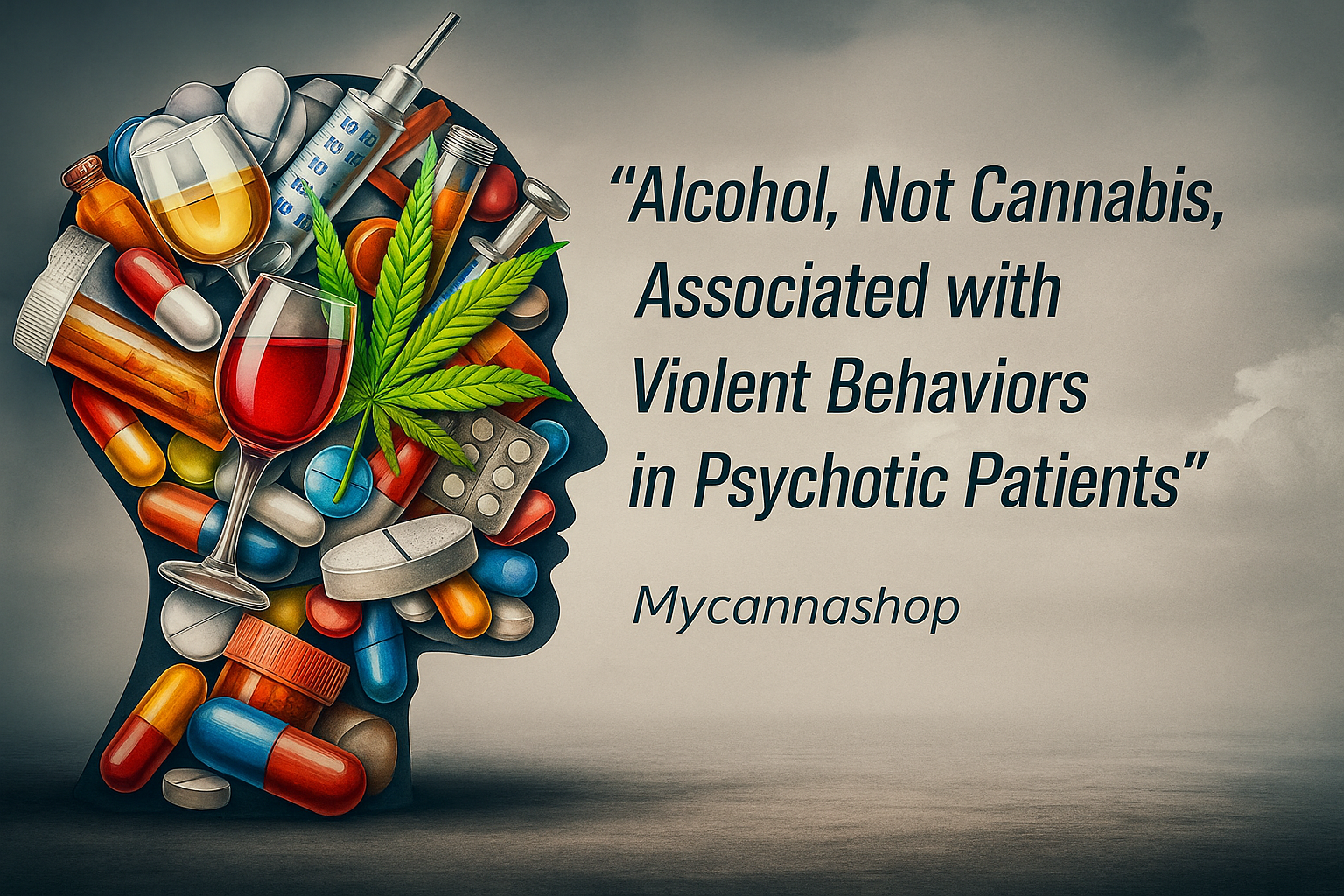
"Alcohol, Not Cannabis, Associated with Violent Behaviors in Psychotic Patients"


The consumption of alcohol, but not cannabis, is associated with an increased likelihood of impulsiveness and violent behavior among subjects with schizophrenic spectrum disorders, according to data published in the Journal of Clinical Psychopharmacology.


The link between substances of abuse, impulsivity, and violence in psychotic patients remains unclear but a team of Canadian and Italian investigators assessed the relationship between the use of alcohol and cannabis on psychotic, impulsive, and violent behavior in a cohort of subjects diagnosed with either schizophrenia or other psychotic disorders.

The term "psychotic disorder" refers to a person's thought dysfunction and is often described as "the patient's loss of contact with reality."

This study aims at unraveling whether cannabis use disorder is associated with violent and/or psychotic behavior in patients who where hospitalized in a high-security hospital.

Tuesday, 25 January 2022

Endocannabinoid system: Essential and mysterious

Many of us have heard of some of the transmitter systems within our bodies, such as the nervous system, which gives us our fight-or-flight response. Fewer have heard of the more recently discovered endocannabinoid system which is amazing when you consider that the ECS is critical for almost every aspect of our moment-to-moment functioning. 


The ECS regulates and controls many of our most critical bodily functions such as learning and memory, emotional processing, sleep, temperature control, pain control, inflammatory and immune responses, and eating. The ECS is currently at the center of renewed international research and drug development.

What is the ECS?

The ECS comprises a vast network of chemical signals and cellular receptors that are densely packed throughout our brains and bodies. The "cannabinoid" receptors in the brain — the CB1 receptors — outnumber many of the other receptor types on the brain. They act like traffic cops to control the levels and activity of most of the other neurotransmitters. This is how they regulate things: by immediate feedback, turning up or down the activity of whichever system needs to be adjusted, whether that is hunger, temperature, or alertness.

A second type of cannabinoid receptor, the CB2 receptor, exists mostly in our immune tissues and is critical to helping control our immune functioning, and it plays a role in modulating intestinal inflammation, contraction, and pain in inflammatory bowel conditions. CB2 receptors are particularly exciting targets of drug development because they don’t cause the high associated with cannabis that stimulating the CB1 receptors does (which is often an unwanted side effect).

To stimulate these receptors, our bodies produce molecules called endocannabinoids (also called endogenous cannabinoids), which have a structural similarity to molecules in the cannabis plant, the anandamide (AEA) & the 2-arachidonoylglyerol (2-AG)

Wednesday, 8 December 2021

"Use of CBD in the Treatment of Epilepsy: Efficacy and Security in Clinical Trials"

CBD has received a great scientific interest thanks to its medical applications. 

In recent years, the scientific community has shown interest in this compound also due to its good safety profile and neuroprotective properties  in several neurodegenerative diseases.

CBD also generating interest due to its therapeutic properties such as antidepressant, antipsychotic, analgesic, and antitumor. 


In addition, it has been shown that CBD can significantly reduce two important forms of anxiety, namely obsessive-compulsive disorder and post-traumatic stress disorder.

CBD shows anti-inflammatory properties in several experimental studies, modulating some pro-inflammatory cytokines and tumor necrosis factor as well as regulation of cell cycle and immune cells’ functions

Moreover, for a long time, the CBD has been investigated for its anticonvulsant effects. Several studies confirmed its efficacy in the treatment of epileptic seizures, especially in pediatric age. In 2016, the first results of  clinical trials showed beneficial effects of CBD in treatment-resistant seizure disorders, including Lennox-Gastaut Syndrome (LGS) and Dravet syndromes (DS).

The purpose of this paper wich published in  12 April 2019 from the 'Molecules Open Access Journals' is to evaluate the use of CBD, in addition to common anti-epileptic drugs, in the severe treatment-resistant epilepsy through an overview of recent literature and clinical trials aimed to study the effects of the CBD treatment in different forms of epilepsy. 

The results of scientific studies obtained so far the use of CBD in clinical applications could represent hope for patients who are resistant to all conventional anti-epileptic drugs.

Wednesday, 10 November 2021

Cannabis and endocannabinoid modulators: Therapeutic promises and challenges

The discovery that botanical cannabinoids such as THC exert some of their effect through binding specific cannabinoid receptor sites,has led to the discovery of the Endocannabinoid Signaling System, which in turn has spurred research into the mechanisms of action and addiction potential of cannabis.


This paper reviews current understanding of CB1, CB2, and other possible cannabinoid receptors, their arachidonic acid derived ligands (e.g. anandamide 2 arachidonoyl glycerol), and their possible physiological roles. CB1 is heavily represented in the central nervous system, but is found in other tissues as well CB2 tends to be localized to immune cells. Activation of the endocannabinoid system can result in enhanced or dampened activity in various neural circuits depending on their own state of activation.

This suggests that one function of the endocannabinoid system may be to maintain steady state. The therapeutic action of botanical cannabis or of synthetic molecules that are agonists, antagonists, or which may otherwise modify endocannabinoid metabolism and activity indicates they may have promise as neuroprotectants, and may be of value in the treatment of certain types of pain, epilepsy, spasticity, eating disorders, inflammation, and possibly blood pressure control.